








Sleek white Jaguar cars, covered in sensors with a spinning 360-degree camera on top, have taken over the streets of major cities like San Francisco, Phoenix, Los Angeles, Atlanta, and Austin. But when you look into the driver’s seat, there’s no one there. These cars are Waymo’s self-driving vehicles owned by Alphabet Inc. They glide through intersections powered entirely by artificial intelligence. While the idea of self-driving cars sounds futuristic and exciting, many residents and workers who share the road are worried about what these vehicles truly mean for safety, jobs, human interaction, and everyday life.
Waymo’s vehicle development began as a Google project in 2009 and has been evolving through many years of testing on public roads, taking over tasks such as taxi driving and deliveries. However, the rollout has not been smooth. There have been accidents, confusion in busy traffic areas, and several disturbing incidents. These include a Waymo vehicle running over and killing a bodega cat, another striking a dog so severely it had to be put down, illegal turns with no driver to ticket, and even a report of a strange man hiding in the trunk while a mother sent her daughter alone in a Waymo. With all the advanced technology these vehicles claim to have, many people question why situations like these were not detected or prevented. For critics, these incidents are proof that autonomous cars are still not ready for chaotic city streets.
There are many safety concerns with rideshare company drivers as well, with things like traffic accidents and sexual assault cases, with victims being drivers and passengers. Getting in a stranger’s car can be nerve-racking, but there are safety concerns all around the world.
Even some Waymo users admit the cars are far from perfect. Mr. Brent Gannetta, a frequent Waymo rider and a paraeducator, described an incident where a Waymo car drove over newly installed speed bumps at full speed without slowing down. “I pressed the in-vehicle intercom and was connected to a human instantly,” he said. “The representative was apologetic and refunded my trip, but this shows that the cars still struggle with even minor, everyday changes in the road.” Although the vehicle later adjusted to the speed bumps, experiences like this highlight the limitations of self-driving technology.
Many people choose Waymo because they want to avoid human interaction altogether. “Waymo allows me the freedom to skip taking transit and ride alone,” says Mr. Brent. While this may feel convenient, it raises deeper questions about the kind of society we are creating when people actively avoid conversation and rely on artificial intelligence and technology instead. Humans are social beings, and removing small, everyday interactions, such as chatting with a driver, can gradually affect how people connect, communicate, and mess with the human brain. The popularity of features like Uber’s “quiet mode” shows just how common this desire to avoid interaction has become.
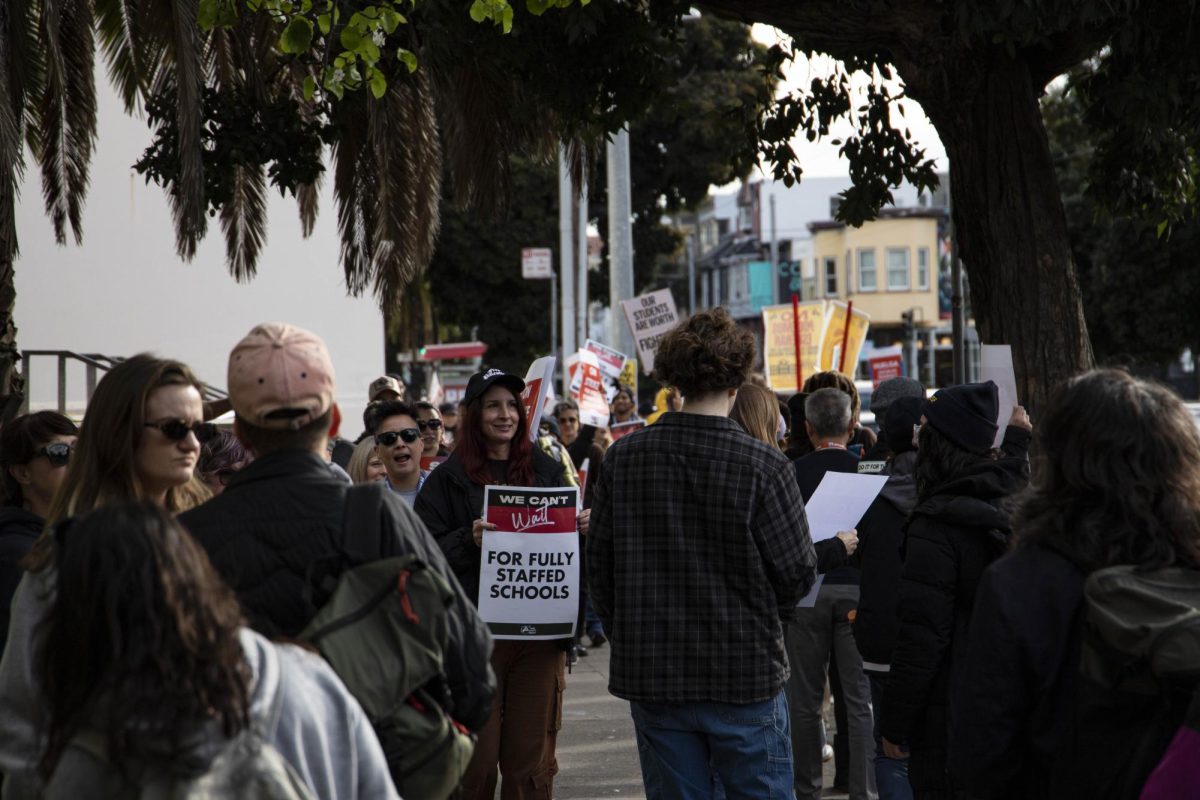
Waymo also raises serious questions about jobs. Taxi drivers, delivery workers, and rideshare drivers could lose their livelihoods as self-driving cars become more common. CEO of Uber, Dara Khosrowshahi, is also concerned about drivers losing their jobs, expressing that he thinks “10 to 15 years from now, this is going to be a real issue.” It is difficult to imagine a future where humans completely give up driving. Many people enjoy the control and freedom that comes with being behind the wheel, and current autonomous vehicles are still far from flawless.
After the bodega cat incident and the recent case in which a Waymo vehicle hit a dog in the Western Addition, Mission District (D-9) Supervisor Jackie Fielder called for state legislators to allow voters to decide, county by county, whether autonomous vehicles should be permitted on their streets. San Francisco now stands at a crossroads. Autonomous cars may represent the future, but before we fully hand over our streets to AI, it may be time to slow down, pay closer attention, and give the public a real voice in shaping the future of transportation.
Edited by Camille Ng.