






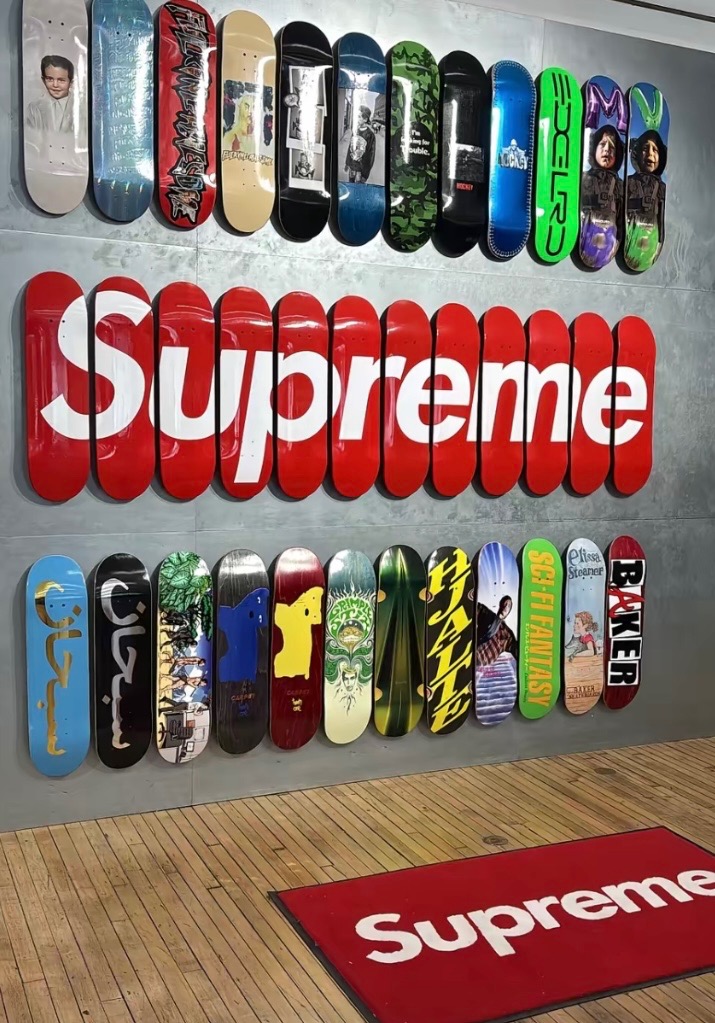

It all started in a small skate shop on Lafayette Street, Lower Manhattan in New York City in 1994. James Jebbia, a one-man army with a passion for skating and streetwear clothing created one of the most iconic streetwear brands in fashion and streetwear history AKA SUPREME!!! How did Supreme, a brand that paved the way for streetwear, go from being seen as one of the godfather brands, to now being overused, culturally shifted, and lost from the skate community? What went wrong with Supreme?
Intro
In 1994 we would first be introduced to Supreme as a skater brand and it would flow under people’s radars for some time. It would start to catch fire in the mid-2000s, hitting the fashion and streetwear scene. Supreme was worn by various celebrities like Kanye, Kid Cudi, and most notable Jim Jones, a pioneer for streetwear fashion.
Supreme was an exclusive brand with little to no accessibility and had so much hype. Starting the hypebeast era one of the most notable figures of that time was Youtube sensation RiceGum. Supreme had people in frenzies over a box logo shirt, let alone a sticker. Wearing Supreme got so serious people would put the box logo sticker on their shirt just to make it seem like they had Supreme. Some even stood in lines for the Supreme logo brick, yes a literal BRICK just because it said Supreme on it. The Supreme hype used to be astronomical.
Rise to fame
How did Supreme become Supreme? Supreme became so big because of how exclusive and limited it was. At one point Supreme was an ifykyk type of brand. Not too many people wore it, but enough did so to build hype. The 2010s would be Supreme’s takeoff. Since it was so limited, this actually made it so much harder for it to obtain. Its popularity rose during the era of streetwear popping off with brands like Bape, Offwhite, and Anti Social. Exclusivity made Supreme even harder to access during this period.
Supreme also started to make jaw dropping collabs with various brands such as Lv, Stoney island, and Nike. Supreme even dropped one of their most iconic pieces, the Supreme X Lv box logo hoodie. This hoodie retailed at $935 USD but later resold for $3500 to $10,000 with selling for over $20,000! This Supreme hoodie has been one of my personal grails for a little over nine years now.
Downfall
Where did Supreme go wrong? Supreme’s downfall would begin around 2022, with their sales going down and their apparel starting to tank in price, for example a FW17 (fall winter sale) box logo hoodie retailed for $148 and then the resale value peaked as high as $1500. Over the years it would still be relatively expensive until 2022 when it would hit a massive tank in value down to $500.
Supreme also started to just do a full 180, a whole complete cultural shift from what they used to be. Supreme used to be exclusive because of the scarcity in their supply. With more Supreme available and accessible, the brand lost its scarcity hype. The company was also sold three times within a 7 year span. James would first sell Supreme to The Carlyle Group in 2017 for 50 percent. Later on he would sell the entire brand to VF corporation in 2020. VF Corporation eventually sold it to EssilorLuxottica in 2024.
What can they do?
How can Supreme get back to the top of the streetwear scene? Supreme needs to bring back their extreme scarcity and limited drops. They need to read their authentic community, and choose never expected collabs with big corporations. Supreme needs to overall pivot away from mass availability and bring back exclusiveness.
While Supreme still makes great clothing and have recently dropped the SS (Spring/Summer) collection which, to say the least, has been fire, by giving jaw breaking collabs with a current fan favorite, Marvel. I personally went this weekend and coped the new Filled Zip up Hooded Sweatshirt and the box logo new era fitted cap.
Might this be the start?
Brandon Drawn • May 7, 2026 at 1:32 pm
If Supreme’s value was dictated by its artifical scarcity, was it ever actually a valuable product?
Max Hidalgo • May 7, 2026 at 1:31 pm
Very interesting article, background context helps to understand it a lot better, even without prior knowledge.